> For the complete documentation index, see [llms.txt](https://docs.robpod.cloud/llms.txt). Markdown versions of documentation pages are available by appending `.md` to page URLs; this page is available as [Markdown](https://docs.robpod.cloud/appendix/security-settings.md).
# Security Settings
Robots by default can have some security restrictions or settings that should be configured before connection with Robpod Studio can be established.
{% tabs %}
{% tab title="UR Polyscope 5" %}
Starting from UR Polyscope 5.14, inbound connections are disabled by default and must be enabled manually. Follow these steps:
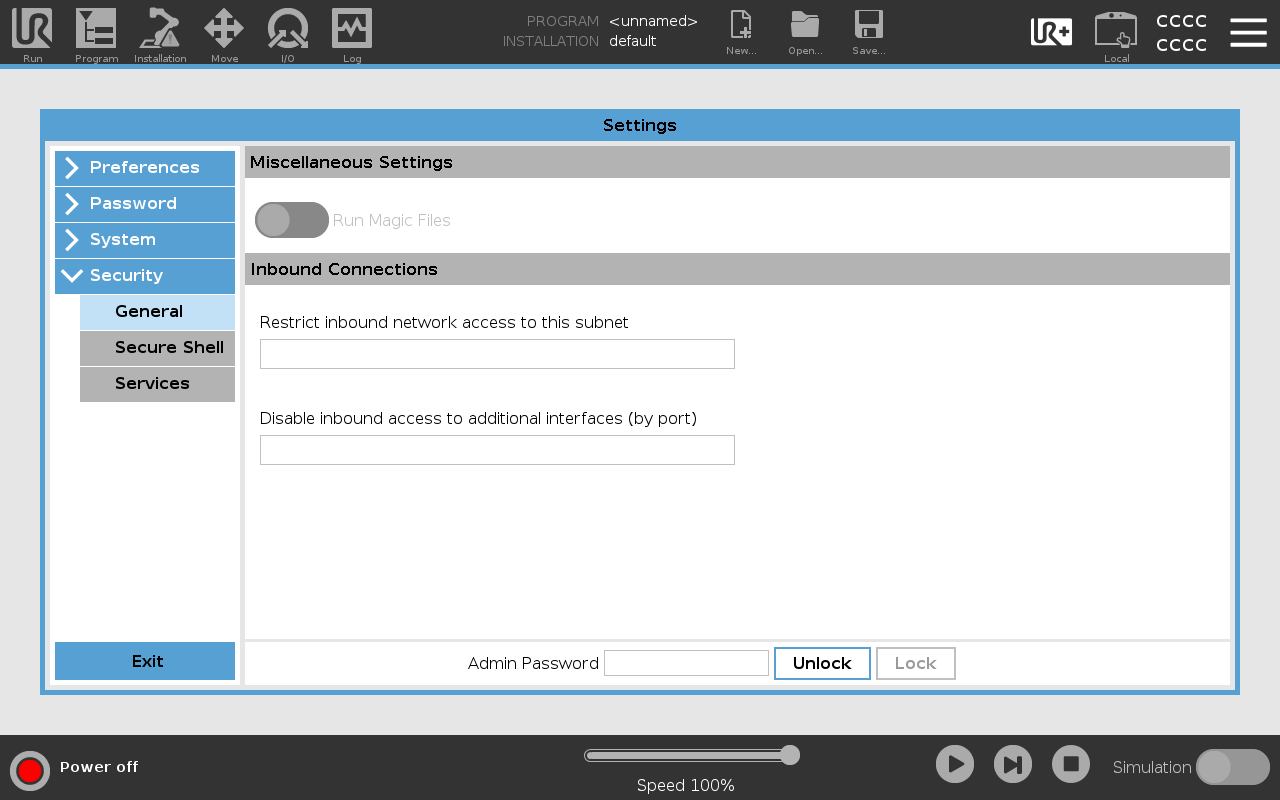
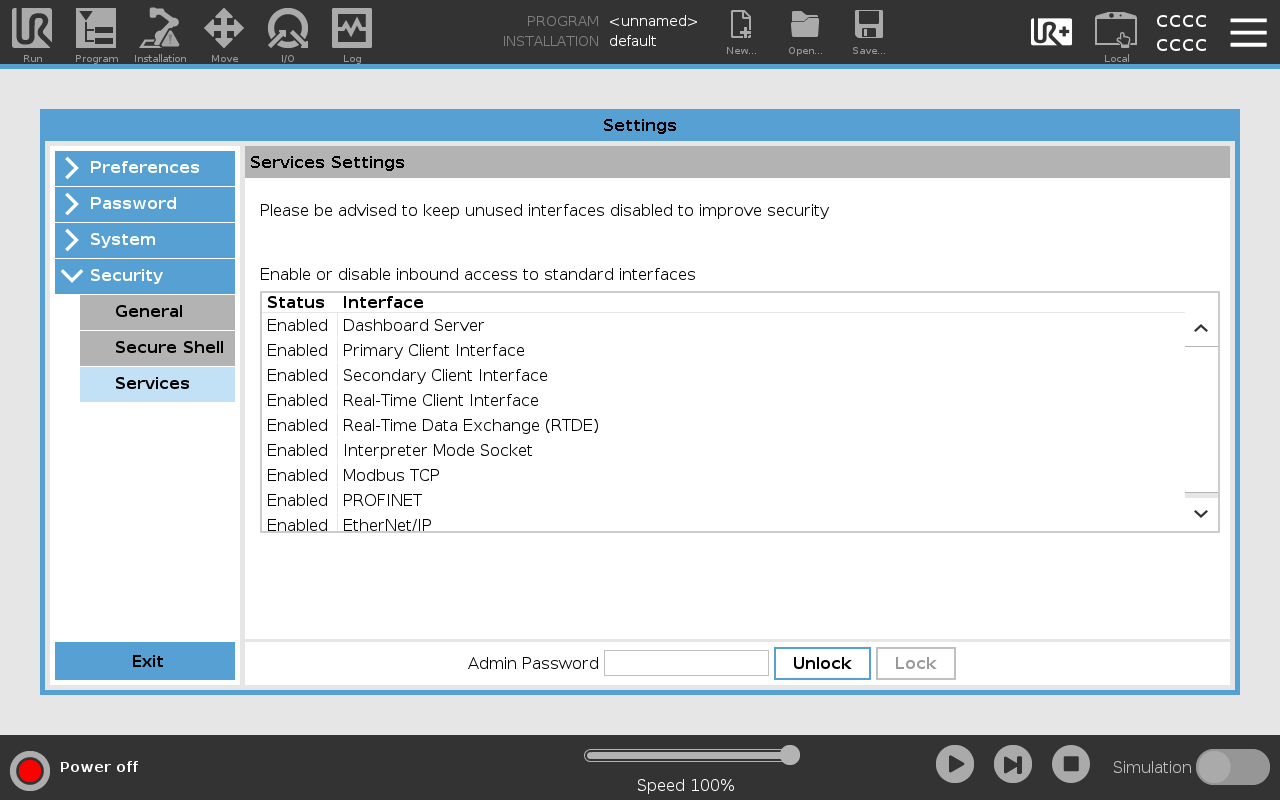
1. On robot teach pendant go to **Settings -> System -> Security**, default admin password is 'easybot'.
2. Remove any restriction on inbound connections.
3. Make sure that SSH Access is enabled.
4. Enable all services.
5. Go to [Synchronization Settings](/synchronization/synchronization-settings.md) and setup same admin credentials used by the robot. Default credentials are:
Username: root
Password: easybot.
{% hint style="warning" %}
Starting from Polyscope 5.17, robot force you to change the default admin password, make sure to set it also inside [Synchronization Settings](/synchronization/synchronization-settings.md).
{% endhint %}
{% endtab %}
{% tab title="UR Ployscope X" %}
Go to **Menu → Settings → Security → Sevices** and enable:
* Primary Client Interface
* Secondary Client Inteface
{% endtab %}
{% endtabs %}